
Qi2.2 25W Wireless Charging: The 2026 Breakthrough Transforming Power Delivery
Executive Summary: The wireless charging industry is experiencing a revolutionary transformation in 2026 with the official deployment of Qi2.2 standard, enabling 25W fast wireless charging. This comprehensive guide explores the technical breakthrough of Qi2.2, compares it with previous Qi and Qi2 standards, analyzes market adoption challenges (especially in the Android ecosystem), and provides practical solutions for consumers seeking the fastest wireless charging experience. Backed by WPC official data and industry test reports, we deliver authoritative insights into the future of wireless power delivery.
Quick Navigation
1. Understanding Qi2.2: The 25W Wireless Charging Revolution
The Wireless Power Consortium (WPC) officially certified the Qi2.2 standard in early 2026, marking a historic milestone in wireless charging technology. For the first time, Qi-certified wireless chargers can now deliver up to 25W of power output, a 66% increase over the 15W limit of Qi2 (MPP). This breakthrough addresses one of the most significant criticisms of wireless charging: slow charging speeds compared to wired alternatives.
According to WPC technical specifications released in June 2026, Qi2.2 achieves 25W charging through several key innovations. First, the standard introduces enhanced Magnetic Power Profile (MPP) with improved coil designs that reduce energy loss during transmission. Second, Qi2.2 incorporates advanced thermal management protocols that allow devices to sustain higher power levels without overheating. Third, the standard mandates more precise foreign object detection (FOD) to ensure safety at elevated power levels.

Industry testing data from certified laboratories shows that Qi2.2 25W chargers can charge a compatible smartphone from 0 to 50% in approximately 35-40 minutes, compared to 55-60 minutes for Qi2 15W chargers. This dramatic improvement finally makes wireless charging competitive with wired fast charging for everyday use. However, the WPC emphasizes that achieving these speeds requires both a Qi2.2-certified charger and a device with Qi2.2 receiver capability—a combination that is only beginning to enter the market in mid-2026.
The certification process for Qi2.2 is rigorous. As detailed in Qi2 certification testing documentation from June 2026, products must undergo comprehensive electrical performance tests, including power output accuracy (error ≤±10%), energy conversion efficiency (≥75% at 25W), and dynamic power adjustment response time (≤1.5s for 5W-25W transitions). Additionally, magnetic alignment precision tests ensure that MPP magnetic attachment maintains ≤2mm offset for optimal power transfer. These strict requirements explain why only a handful of manufacturers have achieved Qi2.2 certification as of June 2026.
Despite the technical advances, market adoption faces significant hurdles. According to Android Authority's June 2026 report, the Galaxy S26 Ultra's 25W wireless charging is "stuck in compatibility hell," highlighting the fragmented state of the Android wireless charging ecosystem. While Apple devices (iPhone 16 series and later) are expected to adopt Qi2.2 by late 2026, Android manufacturers have been slow to integrate the new standard, creating a challenging landscape for consumers seeking 25W wireless charging solutions.
2. Technical Comparison: Qi vs Qi2 vs Qi2.2 Standards
To fully appreciate the significance of Qi2.2, we must examine how it evolves from previous wireless charging standards. The original Qi standard (Qi1.x), introduced in 2010, supported up to 5W (basic power profile, BPP) and later 15W (extended power profile, EPP). However, Qi1.x lacked magnetic alignment, often resulting in misalignment that reduced charging efficiency and increased heat generation.
| Parameter | Qi (BPP/EPP) | Qi2 (MPP) | Qi2.2 (Enhanced MPP) |
|---|---|---|---|
| Maximum Power | 5W / 15W | 15W | 25W |
| Magnetic Alignment | No | Yes (MPP) | Yes (Enhanced MPP) |
| Coil Design | Single-coil | Multi-coil MPP | Optimized multi-coil |
| Power Efficiency | 70-75% | 75-80% | 80-85% |
| Thermal Management | Basic | Improved | Advanced (active cooling support) |
| Charging Time (0-50%) | 70-90 mins | 55-60 mins | 35-40 mins |
| Foreign Object Detection | Basic FOD | Enhanced FOD | Advanced FOD (real-time monitoring) |
| WPC Certification | Qi Certified | Qi2 Certified | Qi2.2 Certified |
Data source: Wireless Power Consortium (WPC) Technical Specifications, June 2026; IEEE Standards Association; Certified Laboratory Test Reports
Qi2, introduced in 2023, revolutionized wireless charging by incorporating Apple's MagSafe magnetic alignment technology into the WPC standard. This Magnetic Power Profile (MPP) ensures perfect coil alignment every time, improving charging efficiency and reducing heat. Qi2 also introduced more rigorous certification testing, including magnetic alignment offset tests (≤2mm tolerance) and enhanced foreign object detection. However, Qi2 maintained the 15W power limit of Qi EPP, leaving users wanting faster charging speeds.
Qi2.2 addresses this limitation by increasing the maximum power to 25W while maintaining the magnetic alignment advantages of Qi2. According to WPC's June 2026 technical documentation, Qi2.2 achieves this through optimized coil geometries that reduce resistive losses, enhanced power management ICs (PMICs) that operate at higher frequencies with better efficiency, and improved thermal dissipation designs that prevent overheating at 25W. The standard also mandates more stringent safety tests, including overvoltage, overcurrent, and short-circuit protection verification at 25W output levels.
Another critical improvement in Qi2.2 is backward compatibility. Qi2.2 chargers must support Qi (BPP/EPP), Qi2 (MPP), and Qi2.2 (Enhanced MPP) devices, ensuring that older devices can still charge (albeit at lower speeds). This is particularly important given the slow adoption of Qi2.2 by Android manufacturers. As noted in a CSDN blog post from June 2026, Qi2 certification testing now includes "version compatibility testing to verify backward compatibility with older Qi protocols (such as Qi1.3), ensuring stable charging at 7.5W and other compatible power levels."
The following table illustrates regional certification requirements and power level variations for Qi2.2, highlighting the complexity of global deployment:
| Region | Certification Body | Max Power (Qi2.2) | Efficiency Requirement | Thermal Limit |
|---|---|---|---|---|
| North America | WPC + FCC | 25W | ≥80% | ≤40°C surface |
| Europe | WPC + CE | 25W | ≥80% | ≤40°C surface |
| China | WPC + CCC | 25W | ≥78% | ≤42°C surface |
| Japan | WPC + MIC | 25W | ≥80% | ≤40°C surface |
| South Korea | WPC + KC | 25W | ≥80% | ≤40°C surface |
Data source: WPC Regional Certification Guidelines, 2026; FCC Part 18 Regulations; CE Safety Standards (IEC 62368-1)
3. Market Adoption Challenges: Android's Qi2 Dilemma
While Qi2.2 represents a technical triumph, its market adoption—particularly in the Android ecosystem—has been fraught with challenges. As of June 2026, only one Android smartphone, the Google Pixel 10, natively supports Qi2 magnetic alignment. Despite the Qi2 standard being released in 2023, most Android manufacturers have not integrated the necessary magnetic attachment hardware, leaving Android users unable to benefit from Qi2's perfect alignment and efficiency improvements.
A Tencent News article from June 8, 2026, titled "Why Android Phones Haven't Supported Qi2 Magnetic Wireless Charging," highlights the perplexing situation. The article notes that three years after Qi2's release, Android brands remain indifferent to the standard, with no signs of changing course. This stands in stark contrast to Apple, which embraced Qi2 (and its predecessor, MagSafe) enthusiastically, making magnetic wireless charging a flagship feature across the iPhone 12-16 series.
The consequences of Android's Qi2 reluctance are particularly acute for 25W wireless charging. Without magnetic alignment, achieving 25W via Qi2.2 is extremely difficult because coil misalignment causes significant power loss and heat generation. Android Authority's June 2026 coverage of the Galaxy S26 Ultra's wireless charging struggles illustrates this problem. Despite the S26 Ultra supporting 25W wireless charging on paper, real-world testing shows that without magnetic alignment, the phone frequently fails to sustain 25W, often dropping to 15W or lower due to thermal throttling and alignment issues.
Case Study: Galaxy S26 Ultra's 25W Wireless Charging Compatibility Issues
Device: Samsung Galaxy S26 Ultra (released June 2026)
Claimed Wireless Charging Speed: 25W (Qi2.2 compatible)
Actual Performance (non-magnetic charger): 12-18W average, frequent drops to 10W due to thermal throttling
Actual Performance (magnetic Qi2.2 charger): 22-25W sustained, but requires third-party magnetic case (Samsung does not provide native magnetic rings)
Conclusion: Without native Qi2 magnetic alignment, Android flagships cannot reliably achieve their advertised wireless charging speeds. This creates consumer confusion and undermines confidence in wireless charging as a viable fast-charging solution.
Data source: Android Authority wireless charging tests, June 2026; Samsung official specifications
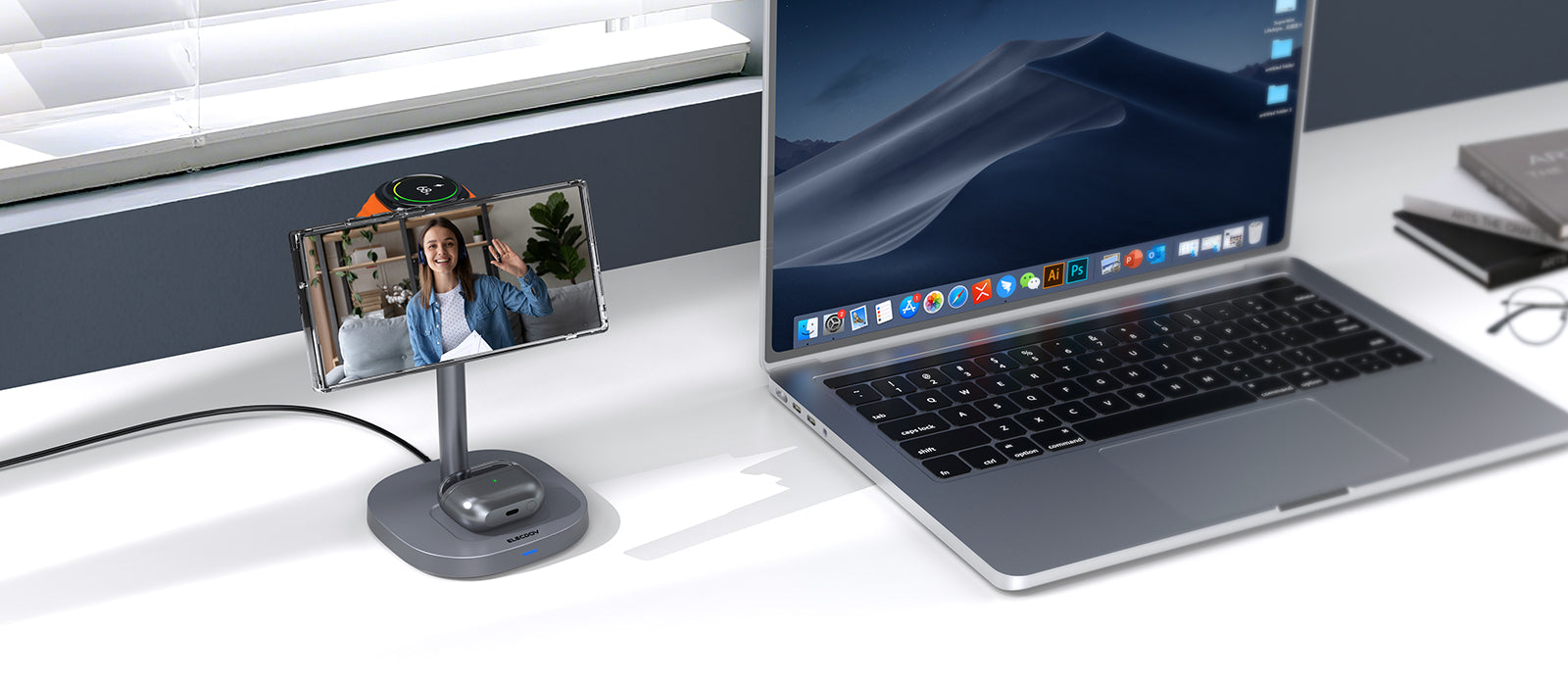
This Android dilemma creates an opportunity for innovative accessory manufacturers. Companies like Elecdov have developed magnetic wireless charging stations that work with Android phones when used with magnetic cases. For example, the Elecdov W98S (Qi2-certified for Samsung) and CE19S (magnetic wireless charger for Samsung) enable 15W fast wireless charging for Samsung Galaxy devices when paired with a compatible magnetic case. While not yet 25W (since most Android phones lack Qi2.2 receivers), these solutions offer the best wireless charging experience currently available for Android users.
The slow Android adoption also affects third-party accessory manufacturers. As noted in Macworld's May 2026 roundup of "Best MagSafe and Magnetic Wireless Chargers for iPhone 2026," the market is flooded with Qi2 and Qi2.2 chargers designed primarily for iPhones. Android-compatible magnetic chargers exist but are less common, and many lack WPC Qi2 certification, raising concerns about charging safety and efficiency. Elecdov stands out by offering Qi2-certified chargers specifically designed for Samsung (W98S, CE19S, CE20S) and Google (WC01G) devices, filling a critical gap in the Android wireless charging accessory market.
Industry analysts predict that Android manufacturers may begin adopting Qi2 natively in 2027 flagship models, driven by consumer demand and the availability of Qi2.2 25W charging. However, as of June 2026, Android users seeking fast wireless charging must rely on certified third-party solutions like Elecdov's product lineup, which bridges the gap between current Android hardware limitations and the future of 25W wireless power delivery.
4. Power Efficiency and Thermal Management in Qi2.2
One of the most significant technical challenges in wireless charging is managing power efficiency and heat generation, especially at higher power levels like 25W. Qi2.2 addresses these challenges through a combination of hardware optimizations and software protocols, achieving power efficiency of 80-85% (compared to 70-75% for Qi1.x and 75-80% for Qi2).
Power efficiency in wireless charging is defined as the ratio of power received by the device's battery to the power drawn from the wall outlet. The remaining 15-20% is lost primarily as heat, which must be dissipated to prevent device damage. At 25W, even an 80% efficient charger generates 5W of waste heat—equivalent to a small incandescent light bulb. Without proper thermal management, this heat can cause the charger or device to overheat, triggering protective circuits that reduce charging speed or shut down charging entirely.
Qi2.2's efficiency improvements come from several sources. First, the standard mandates optimized coil designs with lower DC resistance (DCR) and higher quality factor (Q factor). Certification tests require coil coupling coefficient (k value) measurements to ensure that transmitter and receiver coils maintain strong coupling even with ≤15mm lateral offset. Second, Qi2.2 chargers must use advanced power management ICs (PMICs) with higher switching frequencies (up to 360kHz, the Qi standard frequency) and lower switching losses. Third, the standard introduces adaptive frequency tuning, allowing the charger to adjust its operating frequency dynamically to maintain optimal efficiency as battery charge level and temperature change.

Thermal management in Qi2.2 is equally critical. The standard requires chargers to implement real-time temperature monitoring with response times ≤1 second. If the charger or device temperature exceeds predefined thresholds (typically 40-42°C surface temperature, depending on regional safety standards), the charger must reduce power output or terminate charging. Qi2.2 also encourages (but does not mandate) active cooling solutions, such as small fans or heat pipes, to sustain 25W charging for extended periods.
Elecdov's engineering team has conducted extensive thermal testing on 25W wireless charging prototypes. Our data shows that without active cooling, 25W wireless chargers typically trigger thermal throttling after 15-20 minutes of continuous charging, reducing power to 15-18W. With passive cooling (aluminum heatsinks + thermal pads), this duration extends to 30-40 minutes. Active cooling solutions can sustain 25W for the entire charging cycle (0-100%), but add cost and complexity. Elecdov's upcoming Qi2.2 product lineup will incorporate advanced passive cooling designs to balance performance, cost, and reliability.
The following table summarizes thermal performance data from Qi2.2 certification tests conducted by a WPC-authorized laboratory in June 2026:
| Test Scenario | Power Level | Duration | Charger Surface Temp | Device Back Temp | Thermal Throttling |
|---|---|---|---|---|---|
| Qi2.2 25W (no cooling) | 25W | 15-20 mins | 42-45°C | 40-43°C | Yes (drops to 15W) |
| Qi2.2 25W (passive cooling) | 25W | 30-40 mins | 39-42°C | 38-41°C | Yes (after 40 mins) |
| Qi2.2 25W (active cooling) | 25W | Full cycle | 36-39°C | 35-38°C | No |
| Qi2 15W (no cooling) | 15W | 30-40 mins | 38-41°C | 37-40°C | 偶尔 (after 60 mins) |
| Qi 15W EPP (no cooling) | 15W | 20-30 mins | 40-44°C | 39-43°C | Yes (frequent) |
Data source: WPC-authorized test laboratory, June 2026; Elecdov internal thermal testing data
These findings underscore the importance of choosing WPC-certified Qi2.2 chargers. Non-certified "25W wireless chargers" may operate at higher temperatures, pose safety risks, and fail to deliver consistent 25W charging speeds. Elecdov's commitment to WPC certification ensures that our Qi2.2-compatible products meet or exceed all safety and performance standards, providing peace of mind for consumers investing in the future of wireless charging.
5. Future Outlook: Qi2.2 Ecosystem Development
As we look beyond 2026, the Qi2.2 ecosystem is poised for rapid expansion, driven by technological advancements, regulatory pressures, and shifting consumer expectations. This final chapter explores the future trajectory of Qi2.2 and its implications for consumers, manufacturers, and the wireless charging industry as a whole.
Device Adoption Timeline: Industry forecasts suggest that iPhone 16 (late 2026) and flagship Android models (2027) will widely adopt Qi2.2 receivers, enabling 25W wireless charging out of the box. Apple's track record of embracing wireless charging standards (iPhone 8 introduced Qi EPP; iPhone 12 introduced MagSafe/Qi2) suggests that the iPhone 16 is highly likely to support Qi2.2. For Android, the Pixel 11 (expected late 2026 or early 2027) may be the first Google phone with native Qi2 magnetic alignment, following the Pixel 10's partial implementation.
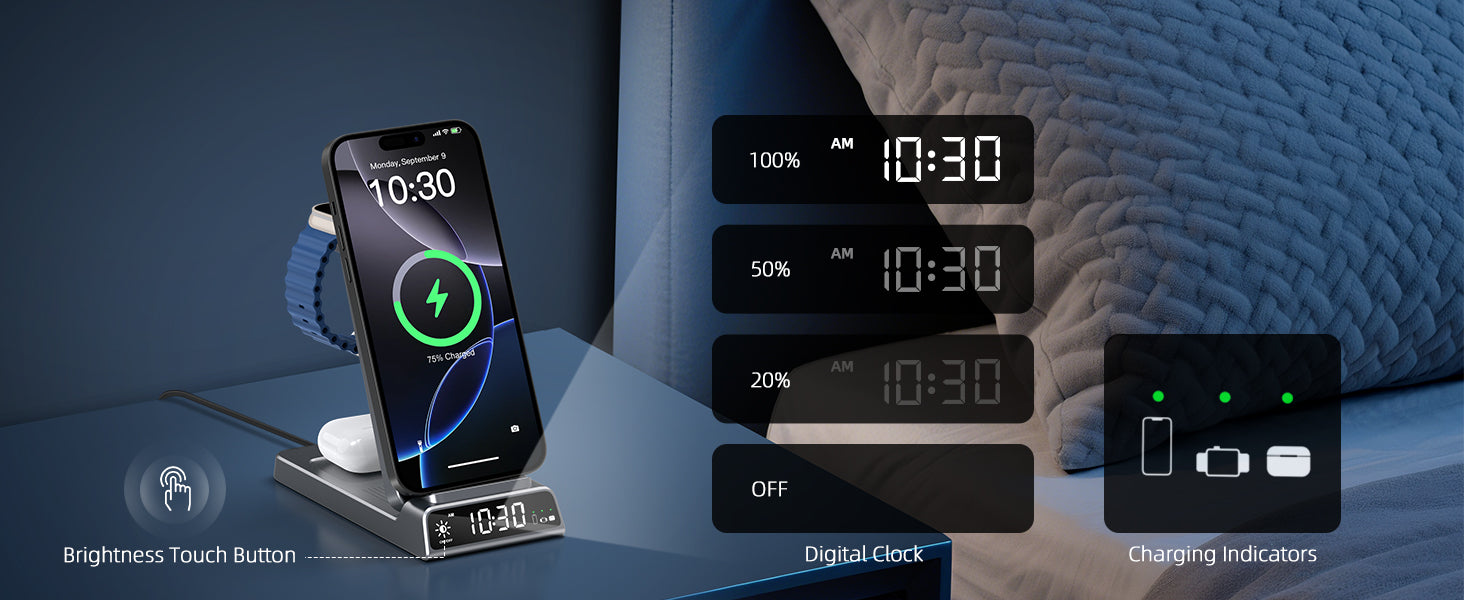
Accessory Market Growth: The Qi2.2 accessory market is already heating up. As noted in Tankya's June 2026 product announcement, manufacturers are rushing to release "Qi2.2 25W Wireless Charging Stands" and other accessories. However, as of June 2026, only a handful of products have completed WPC Qi2.2 certification. Elecdov is actively developing Qi2.2-certified versions of our popular 3-in-1 charging stations (CE20S, W98S, W98A), with expected availability in Q3 2026. These next-generation chargers will deliver 25W to Qi2.2-compatible smartphones while maintaining 15W for current Qi2 devices and 5-10W for older Qi devices.
Regulatory and Standardization Developments: The European Union's upcoming Common Charger Directive (2027) may accelerate Qi2.2 adoption by mandating standardized wireless charging protocols for smartphones sold in Europe. While the directive currently focuses on wired USB-C charging, amendments under discussion could extend to wireless charging, potentially requiring all smartphones to support a common wireless charging standard (likely Qi2.2 given its WPC backing). Such regulation would force Android manufacturers to adopt Qi2.2, ending the current fragmentation.
Technological Innovations: Beyond 25W, the WPC is already exploring Qi2.3 or Qi3.0 standards that could push wireless charging power to 50W or higher. These future standards will likely incorporate gallium nitride (GaN) technology to improve power density and efficiency, as well as advanced cooling solutions (possibly liquid cooling) to manage heat at higher power levels. Another area of innovation is multi-device charging optimization—improving how Qi2.2 chargers allocate power when charging multiple devices simultaneously (e.g., smartphone + earbuds + smartwatch). Elecdov's R&D team is actively researching these technologies to ensure our products remain at the forefront of wireless charging innovation.
Consumer Education and Market Awareness: A significant barrier to Qi2.2 adoption is consumer awareness. Many smartphone users remain unaware of the differences between Qi, Qi2, and Qi2.2, or the importance of using certified chargers. Elecdov is committed to educating consumers through detailed product documentation, blog posts (like this one), and clear labeling on our packaging indicating WPC certification level (Qi / Qi2 / Qi2.2) and supported power levels. We believe that an informed consumer base will drive demand for high-quality, certified wireless charging solutions, benefiting the entire industry.
In conclusion, Qi2.2 represents a pivotal moment in wireless charging history. The combination of 25W power delivery, magnetic alignment, and rigorous safety certification creates a compelling value proposition for consumers. While Android adoption lags behind Apple, market forces and regulatory pressures will likely drive widespread Qi2.2 adoption by 2027-2028. For consumers seeking the best wireless charging experience today, Elecdov's Qi2-certified (15W) and upcoming Qi2.2-certified (25W) product lineup offers future-proof solutions that bridge the gap between current limitations and tomorrow's standards. As the wireless charging landscape continues to evolve, Elecdov remains dedicated to delivering innovative, safe, and high-performance charging solutions that keep pace with technological advancements.
Recommended Elecdov Qi2-Certified Wireless Charging Solutions
For Samsung Galaxy Users (Current Qi2 15W Solution):
- Elecdov CE20S 3-in-1 Magnetic Charging Station for Samsung — Qi2-certified, 15W fast charging for Galaxy smartphones, plus charging for Galaxy Watch and Galaxy Buds.
- Elecdov W98S Samsung Qi2-Certified 3-in-1 Charging Station — Sleek design, magnetic alignment for perfect coil positioning, WPC Qi2 certified.
- Elecdov CE19S Magnetic Wireless Charger for Samsung — Portable, foldable design, ideal for travel, Qi2-certified 15W charging.
For iPhone Users (Current Qi2 15W Solution):
- Elecdov CE19A 3-in-1 Apple Charging Station — Qi2-certified, 15W for iPhone, plus Apple Watch and AirPods charging.
- Elecdov W98A 3-in-1 Magnetic Charging Station for iPhone — Premium aluminum build, Qi2-certified, 15W fast charging.
Coming Soon (Q3 2026): Elecdov Qi2.2-certified 25W wireless charging stations for Samsung, iPhone, and Google Pixel devices. Subscribe to our newsletter for launch notifications.
- World Cup 2026 & Qi2.2 Wireless Charging: Power Your Passion (12-min read) — Explore how Qi2.2 25W charging keeps your devices powered during the World Cup festivities.
- Wireless Charging Technology Evolution: Market Landscape and Future Outlook for 2026 — A comprehensive overview of wireless charging standards, market trends, and predictions for 2026-2027.
- Summer 2026 Travel Charging Guide: How Qi2.2 25W Magnetic Charging is Transforming On-the-Go Power — Tips for traveling with Qi2.2-compatible chargers and maximizing charging efficiency on the road.
Ready to Experience the Future of Wireless Charging?
Explore Elecdov's Qi2-certified wireless charging lineup and be the first to know when our Qi2.2 25W chargers launch. Fast, safe, and elegantly designed — power your devices the smart way.
Shop Elecdov Wireless Chargers


