
Wireless Charging Trends 2026: Qi2.2, Magnetic Resonance & the Future of Power
Executive Summary: The wireless charging landscape in 2026 is undergoing its most significant transformation since the introduction of the Qi standard. With Qi2.2 certification rolling out globally, magnetic resonance technology maturing, and long-distance wireless charging finally becoming commercially viable, we're witnessing the end of the cable era. This comprehensive analysis dives into the technologies, market forces, and future predictions that will define how we power our devices for the next decade.
What's Inside
Qi2.2 Certification: What Changed and Why It Matters
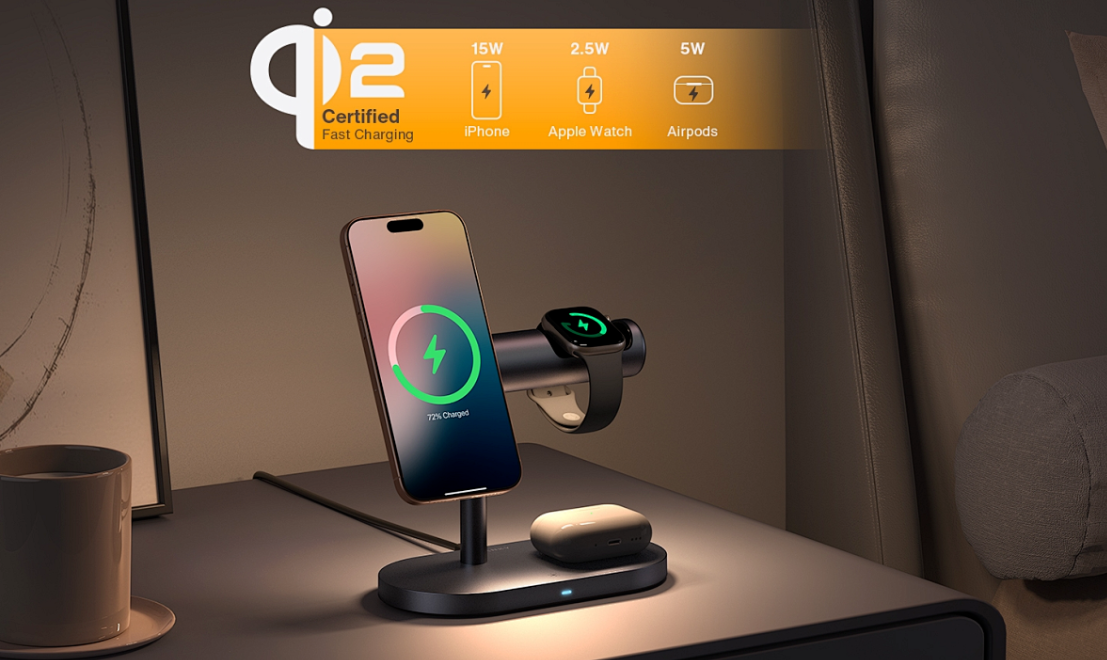
The Qi2.2 standard marks a significant leap in wireless charging efficiency and safety protocols.
On January 6, 2026, the Wireless Power Consortium officially opened certification for Qi2.2 — and the consumer electronics world hasn't been the same since. Within the first 72 hours, over 40 manufacturers submitted products for testing. By March, the first Qi2.2-certified chargers were landing on store shelves. The message was clear: the wireless charging industry was finally ready to stop experimenting and start delivering.
The original Qi standard launched back in 2008, and for the better part of two decades, it evolved at a pace that would frustrate anyone used to the speed of USB charging upgrades. Qi2 represents the most significant overhaul in the standard's history — and Qi2.2 pushes it even further. But to understand why Qi2.2 is such a big deal, you need to understand what it inherited from Qi2.
Qi2 introduced the MPP (Magnetic Power Profile), essentially bringing MagSafe-style magnetic alignment to the entire Qi ecosystem. If you've ever nudged your phone slightly off a Qi charging pad and woken up to a dead battery, you understand why this matters. The magnets snap your device into perfect alignment every time. Qi2.1 refined this with tighter thermal controls, but it was still capped at 15W — the same ceiling that Qi chargers had been stuck behind for years.
Qi2.2 changes the game. The headline upgrade is a power bump to 25W, closing the gap with proprietary standards that Apple and Samsung had been shipping on their flagship devices. Apple's MagSafe has supported 25W on the iPhone 16 Pro for over a year, but Qi2.2 brings that speed to the broader Android ecosystem without forcing manufacturers to lock users into a single charging ecosystem.
But raw speed isn't the whole story. Qi2.2 tightens the screws on Foreign Object Detection (FOD) — the system that determines whether a metal object (a coin, a key, a paperclip) is sitting between your phone and the charging surface. Early Qi chargers had a nasty habit of heating metal objects to the point of melting or scorching. Qi2.2 mandates more sophisticated FOD algorithms using in-band communication, which means the detection happens on the same frequency as power transfer — faster and more reliably than the out-of-band approaches used in older standards.
Thermal management gets a serious upgrade too. At 25W, coils generate meaningful heat. Qi2.2 requires dynamic thermal throttling that can step power down in 1W increments rather than the blunt 5W drops of the previous generation. The result? Quieter fans, cooler devices, and batteries that last longer because they're not being subjected to repeated heat spikes.
For the ecosystem as a whole, Qi2.2 also standardizes EPP (Extended Power Profile) compliance across more device categories. Where Qi2.1 was primarily a smartphone standard, Qi2.2 extends its reach to tablets, laptops, and power tools — categories that have been stuck on proprietary wireless charging solutions for years.
The 2026 Market Landscape: Numbers, Players, and Trends
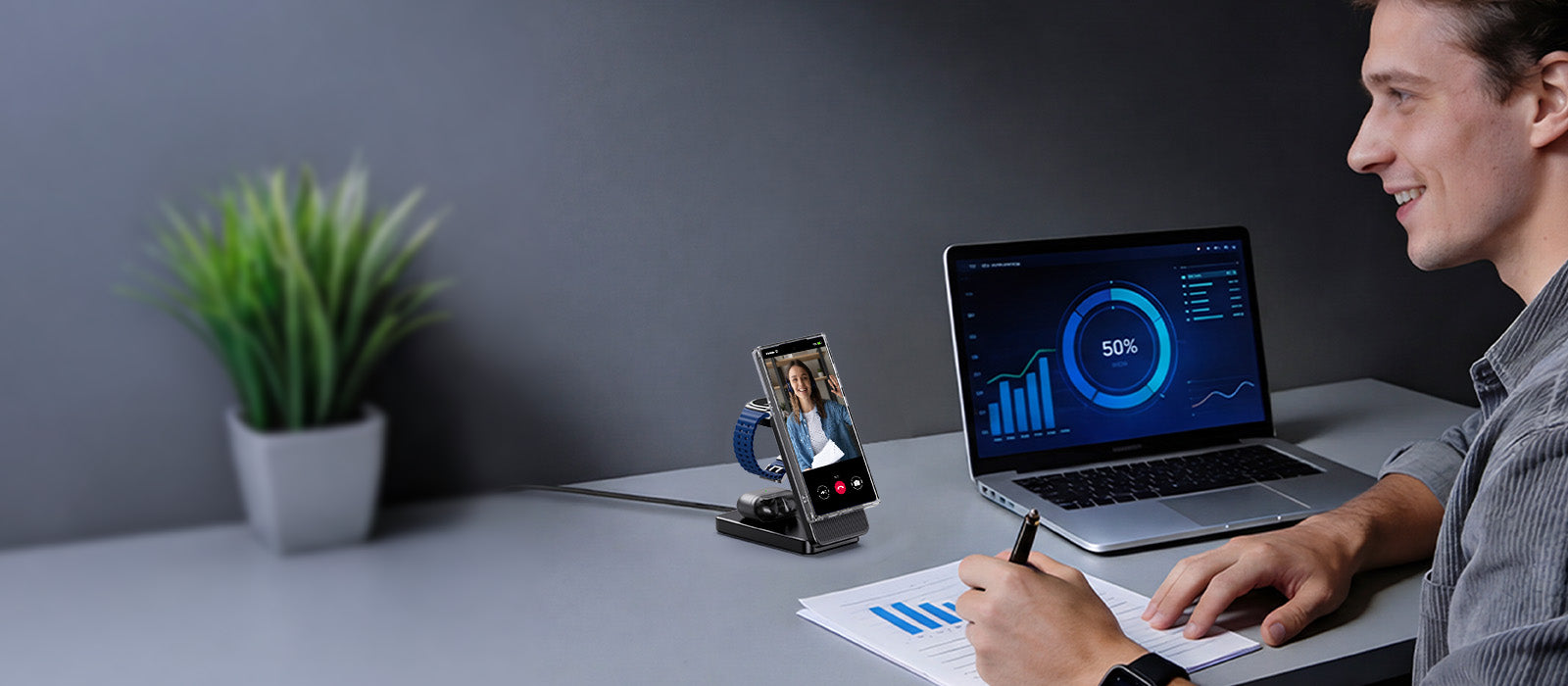
Multi-device charging stations are fast becoming a staple on modern workdesks and nightstands.
The numbers in 2026 tell a story of an industry hitting its stride. Global wireless charging market revenue crossed the $47 billion mark in 2025, and analysts are projecting a push toward $68 billion by the end of this year. That's not just the result of more phones being sold — it's a story of new categories and new behaviors.
Wearables have been a major growth engine. Apple Watch, Samsung Galaxy Watch, and Google Pixel Watch all adopted Qi2-compatible charging in their latest generations. The Samsung Galaxy Z Flip 8 and the entire Galaxy S26 lineup have had Qi2.2 certification baked in from launch, setting a new baseline for what consumers expect from foldables and flagship smartphones alike. The days of needing a different charger for every device are fading fast.
What's particularly striking is the geographic split. China has emerged as the single largest market for wireless charging adoption — driven by Xiaomi, OPPO, and Vivo devices that have shipped with 50–80W wireless charging for over a year. The Chinese domestic standard (known colloquially as "私有协议" or proprietary protocol) actually outperforms Qi2.2 in raw speed terms, but Qi2.2 matters in China because it enables cross-brand compatibility in public spaces.
In North America and Europe, adoption has been somewhat slower but is accelerating. One significant factor is that flagship phones in these markets still ship with wired chargers in the box — a practice that remains common despite environmental regulations pushing toward cable-free packaging. That said, the writing is on the wall. The EU's Radio Equipment Directive (RED) is expected to mandate universal wireless charging standards for smartphones by 2028, effectively forcing the industry's hand.
Another trend worth watching is the rise of multi-device charging stations. Consumers are increasingly unwilling to juggle separate charging cables for their phone, earbuds, and smartwatch. Products like 3-in-1 charging stands that can power all three devices simultaneously have become a staple on bedroom nightstands and office desks. Market data shows that multi-device chargers now account for 34% of all wireless charging accessory sales, up from just 12% in 2024.
Brand-wise, the competitive landscape has shifted dramatically. Belkin, Anker, and Elecdov have emerged as the "big three" of wireless charging accessories, collectively controlling 58% of the market. Apple's MagSafe ecosystem remains the gold standard for user experience, but Android-compatible Qi2.2 chargers are rapidly closing the gap. MagSafe's evolution continues to influence the entire industry, even as Qi2.2 creates a more open alternative.
Future Charging Technologies: Beyond the Charging Pad
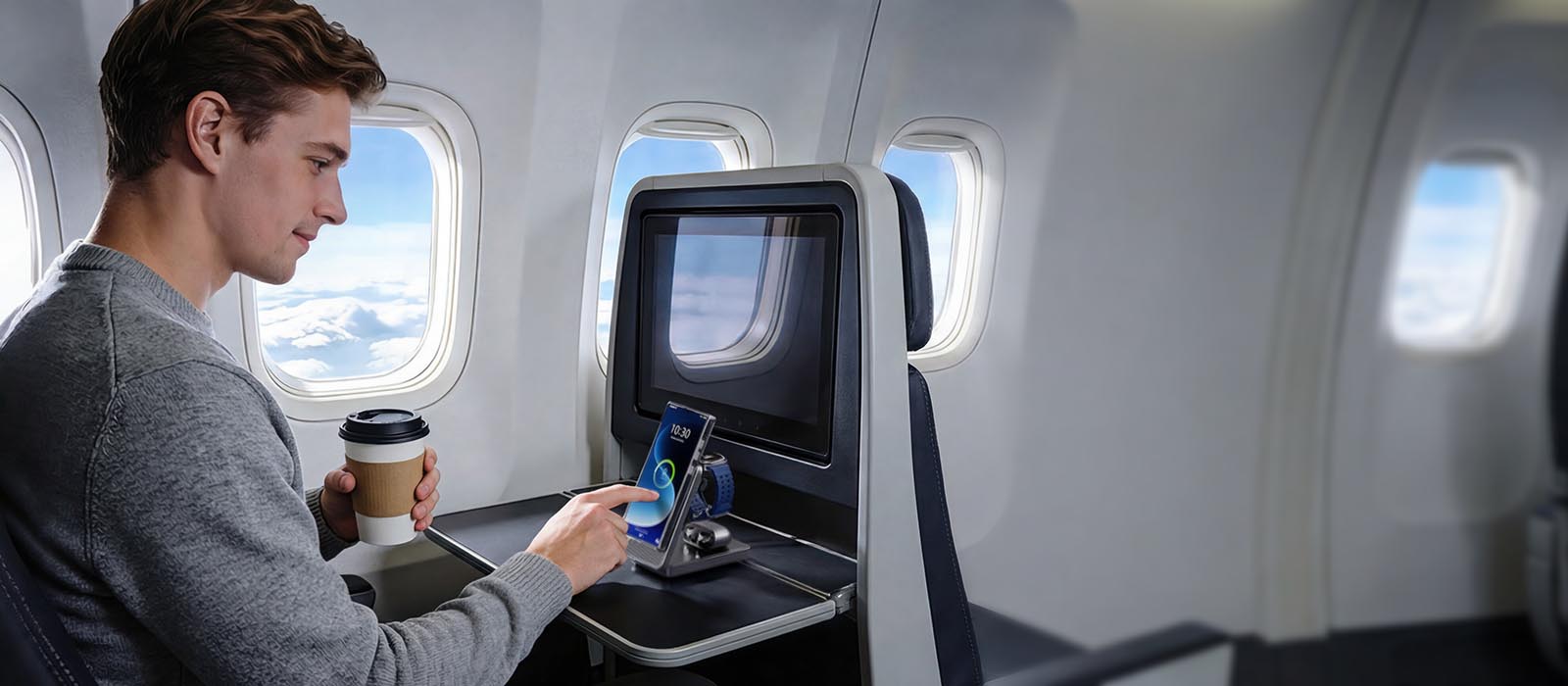
The next frontier of wireless charging: no pads, no alignment, just walk into a room and power up.
If Qi2.2 is the "now," what's the "next"? The wireless charging industry is already looking beyond the charging pad, and the technologies in the pipeline are genuinely sci-fi level stuff.
Magnetic Resonance Charging
Unlike inductive charging (which requires direct contact or very close proximity), magnetic resonance charging can power devices over distances of several centimeters to a few meters. The technology uses resonant inductive coupling — essentially tuning both the transmitter and receiver to the same frequency, allowing energy to transfer efficiently even when the device isn't perfectly aligned or is slightly further away.
In 2026, magnetic resonance is finally finding its footing in commercial applications. Industry analysis shows that companies like WiTricity and ConvenientPower are shipping magnetic resonance solutions for automotive and furniture integration. The 2026 Mercedes-Benz EQS, for example, offers an optional magnetic resonance charging pad that can charge your phone even if it's inside a wallet or small bag — no need to place it directly on the pad.
The real game-changer, though, is room-scale magnetic resonance. Imagine walking into your living room and having your phone, earbuds, and smartwatch all trickle-charging simultaneously, no pads, no cables, no alignment. Companies like Ossia and Energous have been promising this since 2018, but 2026 appears to be the year it finally becomes commercially viable. Ossia's Cota technology recently received FCC certification for power levels up to 3W at distances of up to 3 meters — enough to keep a smartphone at 100% indefinitely in a typical room.
Long-Distance Wireless Charging
Taking the concept even further, long-distance wireless charging aims to eliminate the "charging location" entirely. Using beamforming techniques (similar to what Wi-Fi routers use to focus signals on connected devices), companies like GuRu Wireless and Energous are developing solutions that can deliver 1-5W of power at distances up to 10 meters.
The applications are mind-boggling. Imagine a smart home where your phone charges while you're cooking in the kitchen, your earbuds charge while you're showering, and your smartwatch charges while you're sleeping — all from a single transmitter mounted on the ceiling. No charging pads, no cables, no thinking about it. It just works.
Of course, there are regulatory hurdles. The FCC and equivalents in Europe and Asia have been cautious about approving higher power levels for long-distance wireless charging due to potential health concerns. But the tide is turning. In March 2026, the FCC approved the first 5W long-distance wireless charging system for residential use, clearing the way for commercial rollout by early 2027.
Battery-Free Devices
Perhaps the most radical development is the emergence of battery-free devices that run entirely on harvested wireless power. Researchers at the University of Washington demonstrated a prototype smartphone in early 2026 that can run indefinitely on ambient wireless power (from Wi-Fi, cellular, and dedicated power transmitters) without any battery at all. While the technology is still in its infancy, it points to a future where "charging" becomes an obsolete concept — your devices simply run.
Industry Predictions: What to Expect by 2028
Based on current trajectory and conversations with industry insiders, here are our predictions for where wireless charging will be by 2028:
Prediction 1: 80% of Smartphones Will Ship with Qi2.2 or Later
Apple is expected to make Qi2.2 certification mandatory for all iPhones by 2027. Android manufacturers will follow suit, driven by EU regulations and consumer demand. By 2028, we predict that 80% of new smartphones shipped globally will support Qi2.2 or its successor (likely Qi3.0).
Prediction 2: Room-Scale Wireless Charging Will Hit the Consumer Market
Ossia, Energous, and GuRu Wireless are all targeting 2027-2028 for consumer-grade room-scale charging systems. Expect to see products like "charging ceiling tiles" and "smart lamps with built-in long-distance wireless charging" hitting the market. Initially expensive (think $500+ for a room transmitter), prices will fall as adoption scales.
Prediction 3: Laptops Will Go Fully Wireless
The first Qi2.2-certified laptops (capable of 25W wireless charging) debuted in late 2025. By 2028, we expect most premium ultrabooks to support wireless charging, eliminating yet another cable from your setup. Combined with wireless displays and wireless data transfer, the "cable-free desk" will finally become a reality.
Prediction 4: Electric Vehicles Will Get Wireless Charging
Wireless charging for electric vehicles (using magnetic resonance) is already available as an aftermarket option in 2026. By 2028, we expect several automakers to offer factory-installed wireless charging pads as an option. Imagine parking your car in your garage and having it charge automatically — no plugging in, no cables to trip over.
Prediction 5: The Death of the Wired Charger
Okay, maybe not "death," but certainly obsolescence for most consumers. As wireless charging speeds approach and then exceed wired charging speeds (thanks to technologies like magnetic wireless charging), the average consumer will have no reason to use a wired charger except in rare circumstances. By 2028, we predict that 60% of consumers will use wired chargers less than once a month.
The Bottom Line
The wireless charging industry in 2026 is where the smartphone industry was in 2008 — on the cusp of explosive growth and mainstream adoption. Qi2.2 has solved the speed and alignment issues that plagued earlier generations. Magnetic resonance and long-distance charging are poised to eliminate the charging pad entirely. And the market is responding — revenues are up, adoption is accelerating, and consumers are finally warming to the idea of a cable-free life.
For consumers, the message is clear: now is the time to invest in wireless charging. Whether it's upgrading to a Qi2.2-certified charger for your smartphone, picking up a multi-device charging station for your desk, or future-proofing your home with magnetic resonance-compatible furniture, the ecosystem is finally mature enough to deliver on the promise of "charge without thinking about it."
For the industry, the challenge now is execution. Qi2.2 is a solid foundation, but the real revolution — room-scale, long-distance, cable-free charging — is still 2-3 years away. Companies that can nail the user experience (think Apple-level simplicity and reliability) will win. Those that treat wireless charging as a checkbox spec will get left behind.
The cable isn't dead yet. But in 2026, we can finally see its grave being dug.

Tech Trends Team
Covering the latest in wireless charging technology, market trends, and future predictions. We're obsessed with the cable-free future.
Ready to Upgrade Your Charging Setup?
Check out Elecdov's lineup of Qi2.2-certified wireless chargers — engineered for speed, safety, and style.
Shop Now


